
Building an online business requires time, effort, and careful planning. Although paid advertising can help attract visitors more quickly, not every website owner has the financial resources to invest in marketing campaigns.
Fortunately, there are several ways to generate website traffic without spending money on advertisements.
Free traffic generation methods require patience, consistency, research, and hard work. However, when applied correctly, they can help website owners attract relevant visitors, build an online reputation, and develop a stronger presence on the internet.
The key is to focus on providing useful information, connecting with the right audience, and making your website easy to discover.
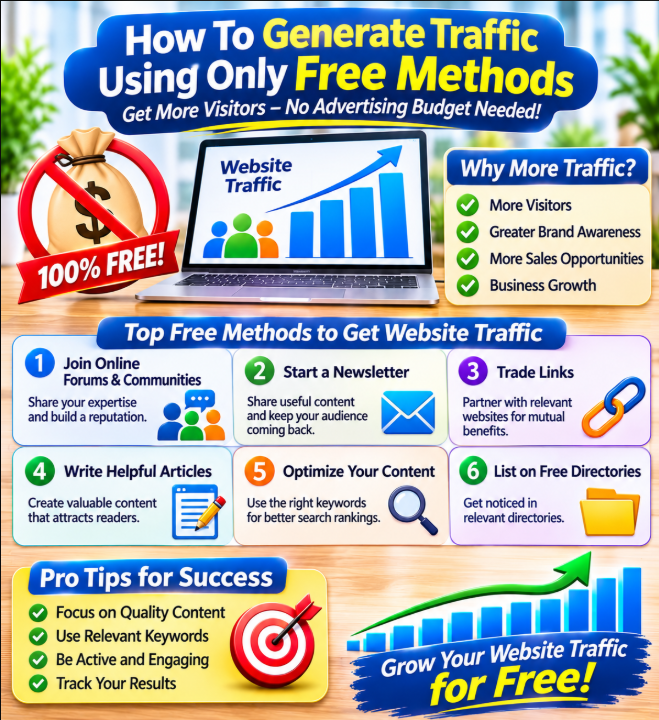
In this guide, you will learn six practical ways to generate website traffic using free methods.
Why Is Free Website Traffic Important?
Website traffic refers to the number of visitors who access your website through different sources, such as search engines, social media, referral links, and online communities.
For businesses and website owners, attracting visitors is an important step toward building an online presence.
However, generating traffic does not always require a large advertising budget.
By using organic marketing strategies, you can attract people who are interested in your content, products, or services.
Some benefits of free website traffic include:
- Reducing dependence on paid advertising.
- Building long-term organic visibility.
- Increasing brand awareness.
- Developing relationships with potential customers.
- Creating opportunities to generate leads and sales.
Although these methods do not require direct advertising payments, they still require an investment of time and effort.
1. Participate in Online Forums and Communities
Online forums and communities are useful places to connect with people who share similar interests.
They allow members to ask questions, exchange ideas, discuss problems, and share useful information.
For website owners, these communities provide opportunities to reach people who may be interested in their products, services, or content.
For example, if you operate a website about website development, you can participate in communities discussing:
- Website design.
- WordPress tutorials.
- Search engine optimization.
- Website security.
- Programming and development.
The most effective approach is to participate genuinely rather than simply posting promotional links.
How to Generate Traffic Through Online Communities
Follow these practical steps:
- Find forums and communities related to your website’s subject.
- Read their rules and understand their posting guidelines.
- Participate in discussions and answer questions.
- Share useful knowledge based on your experience.
- Provide links to your website only when they genuinely help answer a question and are permitted by the community.
Build a Reputation and Earn Trust
Consistent participation can help you establish a reputation as someone who understands the subject.
When people find your contributions useful, they may become interested in learning more about your work and visiting your website.
Remember that trust takes time to develop. Avoid spamming communities with repetitive promotional messages because this can damage your reputation and lead to account restrictions.
2. Create an Email Newsletter
Email newsletters provide another way to attract visitors without paying for advertisements.
Instead of depending entirely on search engines or social media platforms, you can build a direct communication channel with people who have chosen to receive updates from your website.
A newsletter can include:
- New articles and tutorials.
- Product information.
- Useful tips and recommendations.
- Industry updates.
- Special announcements.
- Educational resources.
For example, if you operate a website about digital marketing, you could send subscribers a weekly email featuring new SEO tutorials and practical marketing advice.
How to Use Newsletters to Increase Website Traffic
Start by creating a simple newsletter subscription form on your website.
Encourage visitors to subscribe by explaining the benefits of receiving your updates.
Once people subscribe, send useful emails regularly and include relevant links to your website.
Make sure your newsletters provide value rather than consisting entirely of advertisements.
Build a Long-Term Relationship With Subscribers
A successful newsletter focuses on maintaining a relationship with its audience.
Use clear subject lines, useful information, and relevant website links.
Always obtain permission before sending marketing emails, explain what subscribers can expect, and provide an easy way to unsubscribe.
An engaged email audience can become a valuable source of returning website visitors.
3. Exchange Links With Relevant Websites
Building relationships with other website owners can create opportunities to attract referral traffic.
One approach is to collaborate with websites that cover related subjects.
For example, a website publishing photography tutorials might collaborate with another website that reviews cameras and photography equipment.
When both websites provide genuinely useful resources, their audiences may benefit from discovering each other’s content.
How to Build Website Partnerships
Consider these steps:
- Identify websites that cover topics related to yours.
- Review their content and audience.
- Contact the website owner with a relevant collaboration idea.
- Suggest useful resources that complement each other’s content.
- Add links only when they provide genuine value to readers.
Focus on Relevance and Quality
A relevant link can introduce your website to people who are already interested in your subject.
However, exchanging links solely to manipulate search engine rankings is not a good SEO strategy.
Avoid excessive reciprocal linking, automated link exchanges, and unrelated link placements.
The main objective should be to help readers discover useful information, not simply to increase the number of backlinks.
4. Write Helpful Articles and Guest Posts
Publishing informative articles is one of the most useful ways to attract visitors without paying for advertising.
People regularly search the internet for answers, explanations, tutorials, and solutions to everyday problems.
If your website provides helpful information, it can become a resource for people interested in your subject.
For example, a website about technology could publish articles covering:
- Smartphone maintenance.
- Computer troubleshooting.
- Software tutorials.
- Internet security.
- Website development.
The more useful your content is, the more opportunities you have to attract readers.
Create Articles That Solve Real Problems
Before writing an article, consider what your target audience wants to learn.
Choose topics that answer specific questions and provide practical information.
Use clear headings, organized paragraphs, examples, and helpful explanations.
Avoid writing articles simply to insert keywords or promote products.
Your primary objective should be to provide information that readers can actually use.
Publish Guest Articles on Relevant Websites
Another way to attract visitors is by contributing articles to other websites.
Some website owners accept guest contributions from writers who can provide valuable information to their audiences.
Before submitting an article, research the website and understand its editorial requirements.
Write original content that matches its subject and audience.
If the publisher allows an author biography or relevant website reference, include a natural link to your website.
Guest posting should focus on reaching a relevant audience and sharing expertise rather than obtaining backlinks in bulk.
5. Submit Your Articles to Reputable Publishing Platforms
Many websites and publishing platforms allow writers to share articles with a wider audience.
This creates another opportunity to introduce your content to people who may not have discovered your website otherwise.
However, not every article submission website is worth using.
Choose reputable platforms that maintain editorial standards and attract readers interested in your subject.
How Article Submission Can Generate Traffic
Follow these recommendations:
- Research reputable publishing platforms in your niche.
- Read their content submission guidelines.
- Prepare original and informative articles.
- Use an interesting and accurate title.
- Include relevant author information when permitted.
- Link to your website naturally when the platform allows it.
Avoid Low-Quality Article Directories
Submitting the same article to hundreds of low-quality websites is unlikely to produce meaningful results.
It can also create an unnatural link-building pattern.
Instead, focus on a small number of relevant platforms that provide genuine exposure.
If you republish content that originally appeared on your website, review the platform’s options for canonical links or other content attribution methods.
The objective is to reach additional readers while maintaining the quality and originality of your content strategy.
6. Publish High-Quality Content and Optimize It for Search Engines
Search engines are an important source of website traffic.
People use search engines to find information, compare products, learn new skills, and solve problems.
Creating useful content that matches their search needs can help your website earn organic visibility.
Research Relevant Keywords
Keyword research helps you understand the words and phrases people use when searching for information.
For example, if your website focuses on website development, relevant keywords might include:
- How to create a website.
- Website design for beginners.
- How to improve website speed.
- Basic SEO techniques.
- Website security tips.
Choose keywords that accurately represent the subject of each article.
Avoid forcing keywords into every paragraph.
Write Content for People First
High-quality content should provide useful answers and a satisfying reading experience.
Consider these writing recommendations:
- Use descriptive titles and headings.
- Organize information into logical sections.
- Explain difficult topics in simple language.
- Include practical examples.
- Check spelling and grammar.
- Update outdated information.
- Add relevant internal links.
Your content does not need to be written by a professional copywriter to be valuable.
What matters most is whether it provides accurate, original, and useful information for your readers.
Improve Your Website’s Internal Linking
Internal links connect related pages within your website.
For example, an article about website SEO could link to another article explaining how to create an XML sitemap.
These connections help visitors discover additional information and make it easier to navigate your website.
They can also help search engines discover related pages.
Monitor Your Organic Search Performance
Free tools such as Google Search Console can help you understand how your website performs in Google Search.
You can review information such as:
- Search queries.
- Website impressions.
- Organic clicks.
- Average search positions.
- Indexing information.
- Technical issues.
Use this information to identify opportunities to improve your content.
Remember that publishing optimized content does not guarantee immediate rankings or traffic. Organic visibility takes time and depends on many factors.
Additional Tips for Growing Website Traffic Without Advertising
The six methods above provide a useful foundation, but successful traffic generation also requires consistency.
Here are a few additional recommendations.
Publish Content Consistently
Develop a realistic publishing schedule that you can maintain.
It is better to publish useful articles regularly than to produce large amounts of low-quality content.
Make Your Website Mobile-Friendly
Many people access websites through smartphones and tablets.
Make sure your pages are easy to read and navigate on smaller screens.
Improve Website Loading Speed
Visitors may leave when a website takes too long to load.
Optimize images, use efficient website themes, and avoid unnecessary scripts or plugins.
Build Relationships Within Your Industry
Connect with other publishers, bloggers, and professionals who share similar interests.
Genuine relationships can create opportunities for collaborations, guest contributions, and referral traffic.
Track Your Results
Use website analytics tools to understand where visitors come from and which content attracts the most attention.
Focus on meaningful improvements rather than simply increasing visitor numbers.
Final Thoughts
Generating website traffic without spending money is possible, but it requires patience, consistency, and a willingness to invest time in useful activities.
Participating in online communities, creating newsletters, building relevant website relationships, publishing informative articles, submitting content to reputable platforms, and improving your website’s SEO are all practical ways to attract visitors.
The most important principle is to provide value.
When you consistently publish useful information, participate in relevant communities, and make your website easier to discover, you create more opportunities for people to find and revisit your content.
Free traffic generation may take longer than paid advertising, but it can help build a sustainable online presence without depending entirely on an advertising budget.
Start with the methods that best match your website and audience, measure your progress, and continue improving your strategy over time.
