
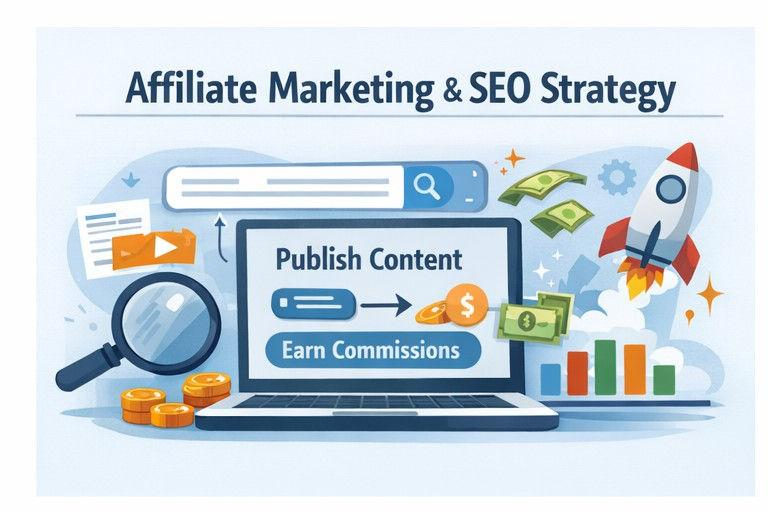
3 Essential Tools Every Affiliate Marketer Needs to Succeed
What does it take to build a successful affiliate marketing business? Is there a shortcut to earning consistent commissions? These are common questions for people who want to turn affiliate marketing into a sustainable online business.
Affiliate marketing can be a practical way to earn income by recommending products or services. However, success rarely happens overnight. It requires planning, useful content, trust, and a clear understanding of the audience you want to serve.
The right tools can make your work more organized and effective. In this guide, we look at three important foundations: a professional website, valuable incentives for your audience, and a sustainable approach to building relevant links.
1. Your Own Website
A website gives your affiliate marketing business a home that you control. It is a place to publish helpful information, explain the products or services you recommend, and build relationships with readers.
Start with a clear purpose. Choose a topic you understand, identify the questions your audience is asking, and organize your website so visitors can find information easily. A simple structure, readable design, mobile-friendly pages, and clear navigation can make the experience better.
Useful content should be the priority. Many visitors arrive at a website because they are looking for answers, comparisons, instructions, or product information—not necessarily because they are ready to buy. Create original articles that address those needs. Explain who a product may suit, what its limitations are, and what readers should consider before making a decision.
Be transparent when you use affiliate links. Tell readers that you may earn a commission if they make a purchase through qualifying links. A clear disclosure helps readers understand your relationship with the products you discuss and supports trust.
A professional website is not simply a collection of promotional links. It should offer value even to visitors who do not make a purchase.
2. Useful Incentives for Your Audience
People are more likely to subscribe to updates when they understand what they will receive. A useful incentive—often called a lead magnet—can give visitors a clear reason to join your email list.
Depending on your subject, you could offer:
- A practical checklist or step-by-step guide.
- A short email course that teaches a useful skill.
- A downloadable template or worksheet.
- A resource list or beginner’s guide.
- Access to a relevant webinar or educational resource.
Make sure the incentive is genuinely useful and closely related to your website’s topic. Avoid exaggerated promises or freebies that have little connection to the content you publish.
If you build an email list, use a reputable email service and obtain clear permission before sending marketing messages. Explain what subscribers are signing up for, avoid adding people without their consent, and provide an easy way to unsubscribe.
Email can help you share new articles, useful resources, and product information with people who have chosen to hear from you. Keep the balance reader-focused: provide helpful information rather than sending constant sales messages.
3. Relevant Links and Quality Backlinks
Getting the right visitors to your website takes time. Search visibility, useful recommendations, an engaged audience, and referrals from relevant websites can all contribute to discovery.
Links from other websites—often called backlinks—can help readers find your content and may contribute to how search engines understand your site’s reputation. However, the quality and context of links matter more than simply collecting a large number of them.
Focus on earning relevant links by publishing original resources that other people may find worth referencing. For example, you could create a detailed tutorial, a well-organized checklist, an original case study, or a clear explanation of a topic in your field. You can also build genuine relationships with publishers, experts, and communities in your niche.
Avoid buying links, using automated link schemes, or arranging large-scale reciprocal link exchanges solely to manipulate search rankings. Submitting the same article to many low-quality directories is not a reliable shortcut. These tactics can create risks rather than build a lasting audience.
A better long-term approach is to make your content useful, share it with relevant audiences, and pursue links that make sense for readers. Track where visitors come from and which pages help them most, then improve your content based on what you learn.
Conclusion
A sustainable affiliate marketing business needs more than promotional links. A trustworthy website gives your work a clear foundation, useful incentives can help you build an audience with permission, and relevant backlinks can help people discover your content.
These three foundations work best when they support one another. Put readers first, be transparent about affiliate relationships, and keep improving the value your website provides. There is no guaranteed shortcut to affiliate marketing success, but a thoughtful and consistent strategy can give your business a stronger foundation.
Editorial and Publishing Notes
Do not add keywords unnaturally or extend the article just to reach a word count.
Add the featured image near the beginning of the article.
Use descriptive internal links to other relevant articles on your website.
Link to reliable sources when you include claims, statistics, or product specifications.
Review affiliate links and product details regularly so they remain accurate.
Add an affiliate disclosure where readers can see it before or near affiliate links.
